
Automation and the Future of U.S. Manufacturing | John Stewart MiddleGround Capital
The following summarizes key perspectives from John Stewart, Founding and Managing Partner of MiddleGround Capital, originally published as a Forbes Council Post – Paid Content.
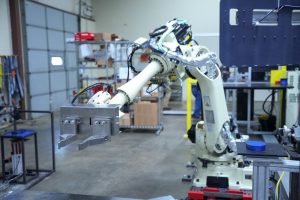
Automation has been reshaping manufacturing for decades, but the pressure to act is higher than ever. A widening labor shortage and rising tariffs are forcing industrial manufacturers to rethink how they operate and push to bring production back to North America. For companies that act now, automation is one of the most reliable levers available to reduce costs, improve output, and stay competitive long term.
The Workforce Gap is Already Here
American manufacturers are facing a skilled labor shortage that is only worsening. By 2033, the industry will need to fill an estimated 3.8 million positions, and nearly half of those jobs are projected to go unfilled. At the same time, 92% of manufacturing executives believe smart manufacturing will be the primary competitive driver for their companies over the next three years.
For small and mid-sized industrial businesses, the time to act is now.
Automation as Operational Value Creation: MiddleGround Capital Portfolio Examples
Across MiddleGround Capital’s portfolio, automation installations have produced operational improvements. One portfolio company in the performance auto parts space invested in robotic forging technology, eliminated a redundant process step, and reduced production downtime by approximately 15%.
Another portfolio company, a precision equipment supplier to the medical device industry, reduced a nine-second timing gap in steel rod output, delivering an increase in throughput.
These examples reflect what is possible when automation is approached deliberately and tied directly to a value creation plan.
Approaching Automation in Industrial Businesses
The biggest barrier to automation is often knowing where to begin. A few principles guide our approach at MiddleGround Capital:
- Build a phased road map that sequences investments based on safety priorities, process criticality, and long-term goals.
- Keep solutions simple and scalable: Repeatable installations often deliver more value than expensive technology that is difficult to maintain or replicate across facilities.
- Evaluate every investment against hard numbers: EBITDA impact, ROI timeline, and valuation multiple.
- Bring the workforce along: Employees need to understand that automation shifts workers toward higher-value roles. This requires clear communication and hands-on training.
The Cost of Waiting
Labor gaps will continue to widen, and demand for automation solutions is already stretching implementation timelines and pushing installation costs higher. Companies that start now with an incremental approach can pace their investment and transition their workforce gradually, building resilience before the labor shortage gets harder to manage.
We believe the manufacturers best positioned for the next decade are the ones treating automation as a strategic priority today rather than a future consideration.
The original article is a Forbes Council Post – Paid Content. Find the full article here:
*This post is a summary of an article originally published in Forbes Finance Council and reflects the views expressed in that publication. It is intended for informational purposes only and does not constitute investment advice.

John Stewart is the Founding and Managing Partner at MiddleGround Capital, an operationally focused private equity firm investing in B2B industrial manufacturing companies across North America. Learn more about John Stewart here.